
A Frustrating Problem That's More Common Than You Think
You press the button on your garage door remote, the door starts its descent, and then — just before it reaches the floor — it reverses direction and goes right back up. You try again. Same thing. Maybe it works on the third attempt, maybe it doesn't. Either way, you're stuck with a garage door that won't stay closed.
This is one of the most common garage door complaints we hear from homeowners in Boynton Beach, and the good news is that the cause is usually identifiable and fixable. The bad news? Ignoring it can lead to security risks, energy waste, and more expensive repairs down the road.
Let's walk through the most likely reasons your garage door reverses before closing completely and what you can do about each one.
Understanding Your Garage Door's Safety System
Before diving into specific causes, it helps to understand why your garage door is designed to reverse in the first place. Modern garage door openers are equipped with two key safety mechanisms mandated by federal law since 1993:
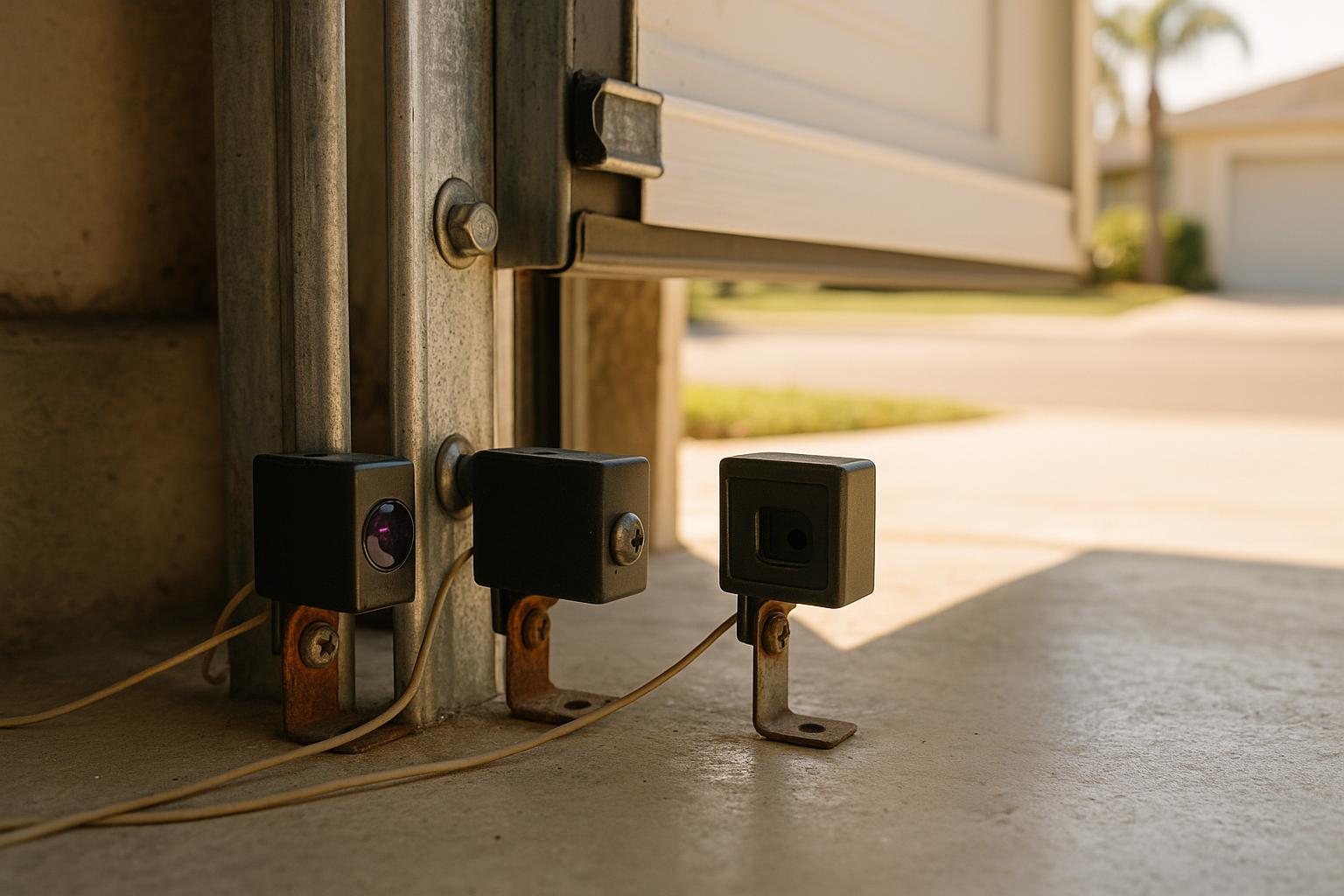
- Photo-eye sensors: Two small sensors mounted near the bottom of your garage door tracks that project an invisible beam across the opening. If anything breaks that beam, the door reverses.
- Auto-reverse mechanism: If the door encounters physical resistance while closing — like hitting an object or the floor too hard — it automatically reverses to prevent injury or damage.
Both systems exist to protect people, pets, and property. When your door reverses unexpectedly, it's usually because one of these systems is being triggered — sometimes for a legitimate reason and sometimes due to a malfunction.
Misaligned or Dirty Photo-Eye Sensors
This is the number one cause of garage doors reversing prematurely. The photo-eye sensors on either side of your garage door opening must be precisely aligned with each other to maintain their infrared beam. If one sensor gets bumped, shifted, or covered in dirt, the system interprets it as an obstruction and reverses the door.
Here in Boynton Beach, our humid climate and frequent rain can contribute to grime buildup on sensor lenses. Lawn debris, spider webs, and even condensation can interfere with the beam.
What You Can Do
- Wipe both sensor lenses gently with a soft cloth.
- Check that both sensors are pointing directly at each other. Most sensors have a small LED light — a steady green light usually means proper alignment, while a blinking light indicates a problem.
- Make sure nothing is blocking the beam path, including trash cans, garden tools, or toys.
- Check that the sensor brackets haven't loosened from vibration over time.
Incorrect Close-Limit Settings
Your garage door opener has limit settings that tell it exactly how far the door should travel before it's considered fully open or fully closed. If the close-limit setting is off, the opener may think the door has hit an obstruction when it contacts the floor, triggering the auto-reverse.
This issue often appears after a new opener installation, a power outage that resets the unit, or gradual settling of your garage structure — something that happens naturally in South Florida's sandy soil conditions.
What You Can Do
Most openers have limit adjustment screws or a digital setting accessible through the motor unit. Your owner's manual will have specific instructions for your model. Adjustments are usually made in small increments — turning the screw slightly and testing the door after each adjustment. If you're not comfortable making these changes yourself, a technician can dial it in quickly.
Worn or Broken Springs
Garage door springs bear the heavy lifting — literally. They counterbalance the weight of the door so the opener motor doesn't have to do all the work. When springs wear out or break, the door becomes significantly heavier, and the opener may struggle to control it properly. In some cases, the added resistance triggers the auto-reverse mechanism.
Signs of spring problems include:
- The door feels unusually heavy when you try to lift it manually.
- You hear loud squeaking or grinding during operation.
- There's a visible gap in one of the torsion springs above the door.
- The door opens unevenly or appears crooked.
Important: Garage door springs are under extreme tension and can cause serious injury if handled improperly. Spring replacement should always be performed by a trained professional.
Track Problems and Obstructions
Your garage door travels along metal tracks on both sides of the opening. If those tracks become bent, misaligned, or obstructed by debris, the door can bind or stick during its travel. When the opener senses this resistance, it reverses.
Inspect your tracks visually for:
- Dents or bends in the metal
- Gaps between the track and the wall mounting brackets
- Debris, rust, or hardened grease buildup inside the track channel
- Rollers that have come out of the track
Minor debris can be cleaned out carefully, but bent tracks or displaced rollers typically need professional attention to ensure the door operates safely.
Worn Rollers or Hinges
Over time, the rollers that guide your door along the tracks and the hinges that connect the door panels can wear out. Worn nylon rollers develop flat spots, and metal rollers can seize up without lubrication. Both conditions create friction and resistance that can cause the opener to reverse.
If you hear grinding, scraping, or popping sounds during door operation, worn hardware is a likely culprit. Roller and hinge replacement is a relatively affordable maintenance item that can dramatically improve your door's performance and extend the life of your opener.
Wiring or Logic Board Issues
Less commonly, the problem may be electrical. Frayed wiring between the sensors and the opener, a failing logic board inside the motor unit, or even power surges — which are frequent during Boynton Beach's summer storm season — can cause erratic behavior including unexpected reversals.
If you've checked the sensors, tracks, springs, and limit settings and the door still reverses, an electrical issue may be at play. This type of diagnosis requires specialized knowledge and testing equipment.
When to Call a Professional
Some of the troubleshooting steps above — cleaning sensors, checking for obstructions, and inspecting tracks — are safe for most homeowners to handle. But several situations call for professional service:
- Broken or visibly damaged springs
- Bent tracks or derailed doors
- Electrical or logic board malfunctions
- Any situation where the door behaves unpredictably or feels unsafe
At Boynton Beach Overhead Door Co, we diagnose reversing issues every week. In most cases, we can identify and fix the problem in a single visit. We serve homeowners throughout Boynton Beach, Delray Beach, Lake Worth Beach, Boca Raton, Lantana, and Wellington with prompt, honest service.
Don't Let a Reversing Door Compromise Your Home
A garage door that won't close all the way is more than an inconvenience. It's a security vulnerability, an invitation for pests, and a drain on your energy bill — especially during our hot and humid summers when your garage connects to air-conditioned living space.
If your garage door keeps reversing and basic troubleshooting hasn't solved the problem, give us a call. We'll get to the bottom of it, explain your options clearly, and get your door working the way it should — no guesswork, no unnecessary upsells, just reliable repair from a local team that stands behind its work.