
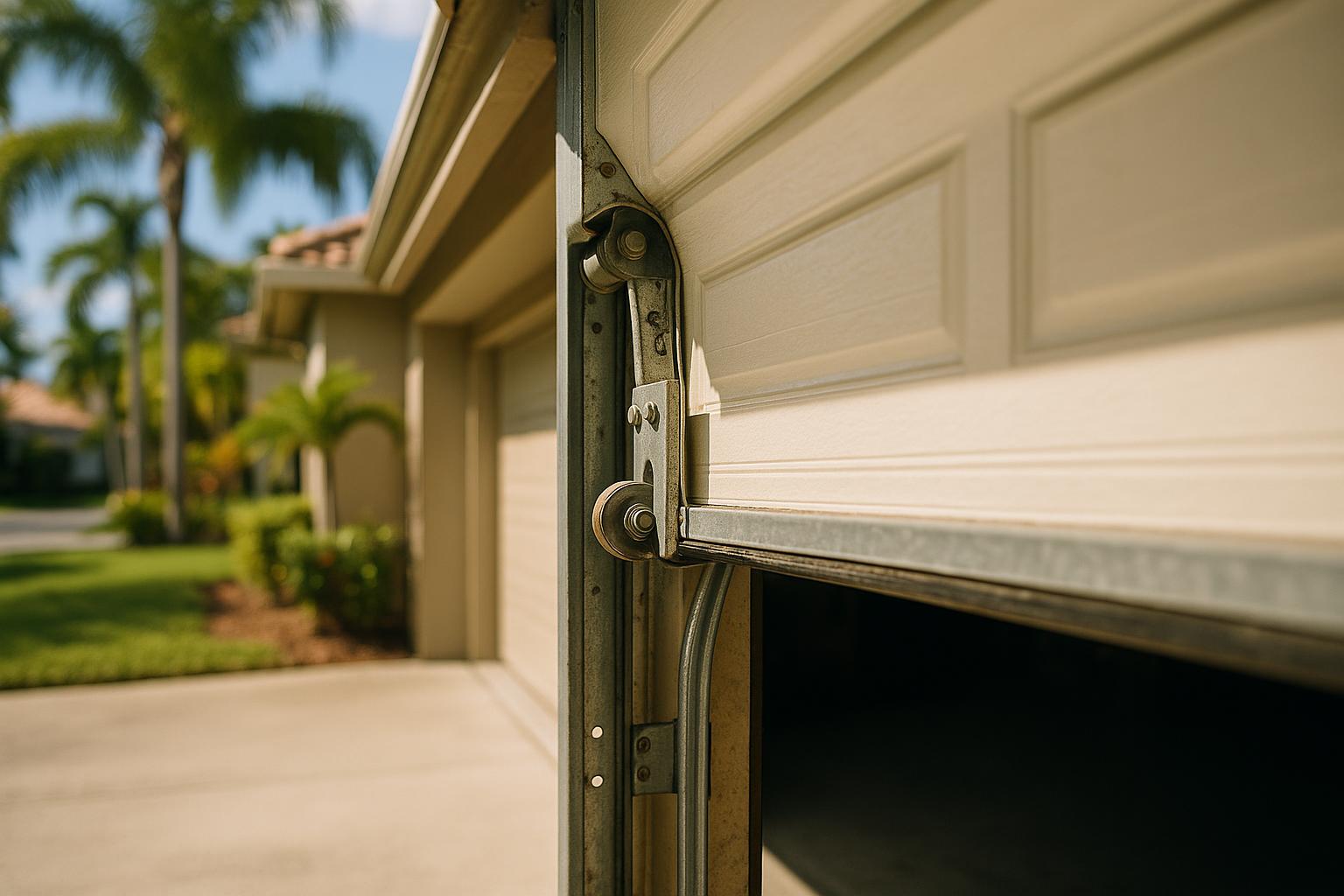
Your Garage Door Shouldn't Sound Like That
You press the button, and instead of a smooth, quiet operation, your garage door greets you with a symphony of grinding, squealing, or banging. If you're a homeowner in Boynton Beach, you've probably experienced this at least once — especially if your garage door has been battling the South Florida heat and humidity for a few years.
The good news is that most garage door noises aren't random. They're clues. Each sound typically points to a specific issue, and understanding what your door is telling you can help you decide whether it's a quick DIY fix or something that needs professional attention.
Let's break down the most common garage door noises, what causes them, and what you should do about each one.
Squealing or Screeching Sounds
A high-pitched squeal when your garage door opens or closes is one of the most common complaints we hear from homeowners. This sound usually comes from one of two sources:
- Dry or worn rollers: Metal rollers running along dry tracks create friction, which produces that unmistakable screech. Over time, rollers wear down and can develop flat spots that make the noise even worse.
- Lack of lubrication: Your garage door has multiple moving parts — hinges, rollers, springs, and bearings — that all need regular lubrication to operate smoothly. In Boynton Beach's humid climate, parts can corrode faster than you might expect, making lubrication even more important.
The fix is often straightforward. Applying a garage door-specific lubricant (not WD-40, which is a solvent, not a long-term lubricant) to the rollers, hinges, springs, and tracks can quiet things down immediately. If the rollers are visibly worn or cracked, they'll need to be replaced — a job that's quick and affordable when handled by a professional.
Grinding or Scraping Noises
A grinding sound is harder to ignore and usually signals a more serious issue. Common causes include:
- Misaligned tracks: If the metal tracks that guide your door become bent or shifted, the door can scrape against them as it moves. This not only creates an unpleasant noise but can also cause premature wear on the door panels and hardware.
- Worn gear in the opener: If you have a chain-drive or screw-drive garage door opener, the internal gears can strip or wear down over time. When this happens, you'll hear a grinding noise coming from the motor unit itself, and the door may struggle to open or stop working entirely.
- Debris in the tracks: Living in South Florida means dealing with sand, leaves, and small debris that can accumulate in your garage door tracks. Even a small obstruction can cause grinding as the rollers try to pass over it.
Start by visually inspecting the tracks for obvious obstructions or bends. Clean the tracks with a damp cloth and check that they're properly aligned. If the grinding is coming from the opener unit, it's best to call a technician — replacing opener gears involves working with electrical components and tension systems that can be dangerous without proper training.
Loud Banging or Popping
A sudden bang or pop when your garage door operates can be startling. Here's what might be going on:
- Torsion spring issues: The torsion springs above your garage door are under enormous tension. As they age, they can shift on the bar or develop weak points that cause popping sounds during operation. A loud, singular bang when the door isn't in use could mean a spring has broken entirely.
- Loose hardware: The constant vibration of daily operation can loosen nuts, bolts, and brackets over time. Loose hinges or track brackets can produce banging sounds as the door moves and the hardware shifts.
- Panel flex: Older or thinner garage door panels can flex under the tension of the springs, creating a popping or banging sound as they straighten out during movement.
You can safely tighten visible nuts and bolts with a socket wrench, but never attempt to adjust or replace torsion springs yourself. These springs carry enough force to cause serious injury. If you suspect a spring problem, contact a professional right away.
Rattling or Vibrating Sounds
A persistent rattle during operation is usually the easiest noise to diagnose and fix. Common culprits include:
- Loose chain on a chain-drive opener: If the chain that connects the opener to the trolley has too much slack, it will vibrate and rattle against the rail during operation.
- Loose hardware throughout the system: Bolts on hinges, brackets, and the opener mounting can all work themselves loose over months and years of use.
- Worn or missing insulation strips: If your garage door has insulation or weatherstripping that has deteriorated, panels may vibrate more freely, creating a rattling sound.
A thorough tightening of all accessible hardware and a chain adjustment (if applicable) will usually resolve rattling. If the noise persists, a technician can identify less obvious sources like worn bearings or internal opener components.
Humming but Not Moving
If your garage door opener hums or buzzes when you press the button but the door doesn't move, the motor is engaging but something is preventing it from doing its job. This could mean:
- A stripped gear inside the opener
- A broken spring that's left the door too heavy for the opener to lift
- The disconnect switch has been activated (often a hanging rope or lever on the opener rail)
Check the disconnect switch first — it's the simplest explanation. If that's not the issue, check whether the door moves freely when you lift it manually (with the opener disengaged). If the door feels extremely heavy, a broken spring is likely the cause. Either way, both stripped gears and broken springs require professional repair.
When to Call a Professional
Some garage door noises can be resolved with basic maintenance — lubrication, tightening hardware, and cleaning the tracks. But many noises point to issues that require specialized tools, replacement parts, and expertise to fix safely.
As a general rule, call a professional if:
- The noise involves the springs or cables
- The door is visibly off-track or crooked
- The opener motor is making internal grinding or buzzing sounds
- Basic maintenance hasn't resolved the noise
- The door feels significantly heavier than usual when lifted manually
At Boynton Beach Overhead Door Co, we handle noisy garage doors every day for homeowners across Boynton Beach, Delray Beach, Lake Worth Beach, and the surrounding areas. Our technicians can quickly diagnose the source of the problem, explain your options, and get your door running quietly again — usually in a single visit.
Keep Your Garage Door Quiet with Regular Maintenance
The best way to prevent strange garage door noises is to stay ahead of them with routine maintenance. A professional tune-up once or twice a year includes lubrication, hardware inspection, track alignment checks, and spring evaluation — all the things that keep your door operating smoothly and quietly.
If your garage door has been making noises that don't sound right, don't wait for a small issue to become a big repair. Give us a call or schedule a service appointment, and we'll get to the bottom of it.