
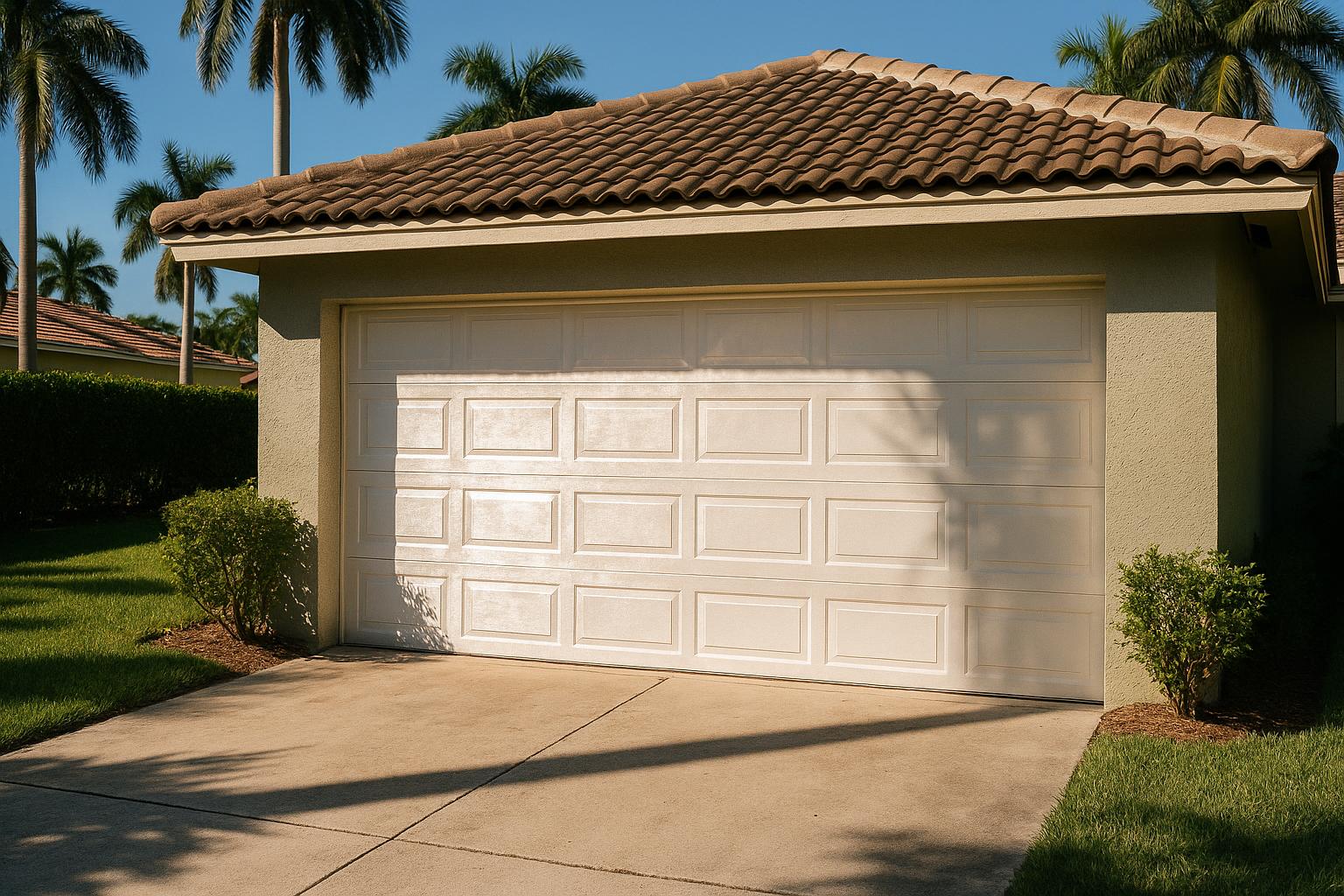
Your Garage Door Has to Survive a Brutal Climate
Living in Boynton Beach comes with plenty of perks — beautiful weather, proximity to the coast, and an outdoor lifestyle that's hard to beat. But that same subtropical climate that draws people here can be incredibly tough on your garage door system. Between the relentless heat, high humidity, salt air, and intense UV exposure, the components that keep your garage door running smoothly face conditions that homeowners in cooler climates never have to worry about.
If you've noticed your garage door sluggish on a hot afternoon, or if rust seems to appear out of nowhere, you're not imagining things. South Florida's environment accelerates wear and tear on every part of your garage door — from the panels and hardware to the opener motor itself. The good news is that with a little awareness and some proactive care, you can keep your garage door performing reliably year-round.
How Heat Affects Your Garage Door System
When temperatures climb into the 90s — which happens regularly from May through October in Boynton Beach — your garage becomes one of the hottest spaces in your home. Without air conditioning, garage temperatures can easily exceed 120°F on a sunny afternoon. That kind of heat impacts your garage door in several ways:
- Metal expansion: Steel and aluminum garage door components expand in extreme heat. This can cause tracks to become slightly misaligned, making the door harder to open and close smoothly.
- Opener strain: Your garage door opener motor works harder in high temperatures. If the motor overheats, many units have a built-in thermal protection system that shuts the opener down until it cools off — leaving you stuck until it resets.
- Lubricant breakdown: The grease and lubricant on your springs, rollers, and hinges can thin out or dry up faster in extreme heat, leading to increased friction and premature wear on moving parts.
- Weatherstripping deterioration: The rubber seals along the bottom and sides of your garage door can crack, harden, and lose their flexibility when exposed to prolonged heat and UV rays.
Humidity and Salt Air: A Corrosion Combo
Heat alone is only part of the equation. Boynton Beach's proximity to the Atlantic Ocean means your garage door is also exposed to salt-laden air and persistent humidity. This combination is the primary driver of corrosion on garage door systems in our area.
What's Most Vulnerable to Corrosion
- Springs: Torsion and extension springs are typically made of steel, and rust weakens them significantly. A corroded spring is far more likely to snap without warning.
- Tracks and rollers: Rust on the tracks creates rough spots that cause the door to jerk, stick, or move unevenly. Steel rollers are especially susceptible.
- Hardware: Hinges, brackets, and fasteners can all corrode over time, loosening connections and compromising the structural integrity of the door.
- Bottom panels: The lowest section of your garage door takes the most abuse from moisture, rain splash-back, and standing water. On steel doors, this is often where rust appears first.
Homes closer to the coast — in areas like Ocean Ridge or along A1A — tend to experience these issues even faster, but no property in the Boynton Beach area is truly immune.
Practical Steps to Protect Your Garage Door
You don't need to be a garage door technician to take meaningful steps toward extending the life of your system. Here are the most effective things you can do:
1. Lubricate Moving Parts Regularly
In South Florida, you should be lubricating your garage door's moving parts every three to four months — more often than homeowners in drier climates. Use a silicone-based or lithium-based garage door lubricant on the springs, rollers, hinges, and tracks. Avoid WD-40 for this purpose, as it's a solvent rather than a true lubricant and won't hold up in our heat.
2. Inspect for Rust Early and Often
Walk around your garage door every couple of months and look for early signs of rust — especially on the springs, bottom panel, and any exposed hardware. Small rust spots can be addressed with a wire brush and a rust-inhibiting primer before they become a bigger problem. If your springs show significant corrosion, don't try to handle that yourself — corroded springs under tension are dangerous and should be replaced by a professional.
3. Replace Weatherstripping Before It Fails
Check the rubber seal along the bottom of your door and the weatherstripping around the frame. If it's cracked, brittle, or pulling away, replace it. Intact weatherstripping keeps out rain, humidity, insects, and debris — all things Boynton Beach garages deal with constantly. It also helps with energy efficiency if you have any climate control in your garage.
4. Keep the Garage Ventilated
Trapped heat accelerates every problem on this list. If your garage has windows, crack them open when possible. Consider adding a ventilation fan or passive vents to help move hot air out. Lowering the ambient temperature in your garage reduces strain on your opener motor and slows the breakdown of lubricants and rubber components.
5. Consider Upgrading to Corrosion-Resistant Materials
If you're replacing a garage door or specific components, talk to your installer about materials designed for coastal environments. Nylon rollers instead of steel, aluminum or fiberglass door panels, and galvanized or stainless steel hardware all hold up significantly better in our climate. The upfront cost is slightly higher, but the longevity makes it worthwhile.
6. Schedule Professional Maintenance Annually
Even with diligent DIY care, a professional tune-up once a year catches things you might miss. A trained technician can test spring tension, check cable condition, verify opener safety features, tighten hardware, and identify components that are close to failure — before they leave you stranded on a hot morning.
When to Call a Professional
Some heat and humidity-related issues are beyond what a homeowner should tackle alone. Call a garage door professional if you notice any of the following:
- Your opener motor shuts off frequently due to overheating
- Springs show heavy rust or have started making popping sounds
- The door is visibly sagging, warping, or no longer sits flush when closed
- Tracks are corroded to the point where the door moves unevenly
- Panels have rusted through or are structurally compromised
These situations involve components under high tension or problems that will only get worse with time. Getting them addressed promptly prevents more costly repairs — or a complete door replacement — down the road.
Living in Boynton Beach Means Adapting Your Home Maintenance
Your garage door is one of the largest moving parts of your home, and it's fully exposed to everything South Florida's climate throws at it. The homeowners who get the longest life out of their garage doors are the ones who treat maintenance as a routine — not something they think about only after a breakdown.
At Boynton Beach Overhead Door Co, we work on garage doors across Boynton Beach, Delray Beach, Lake Worth Beach, Boca Raton, Lantana, and Wellington every day. We see firsthand how the local climate affects these systems, and we're always happy to help homeowners stay ahead of problems rather than react to them. Whether you need a tune-up, a rust inspection, or advice on upgrading to materials that can handle the heat and humidity, give us a call. We'll make sure your garage door is ready for whatever the South Florida weather brings next.