
Your Garage Door Springs Are Doing More Work Than You Think
Every time you open or close your garage door, the springs are doing the heavy lifting — literally. A standard two-car garage door can weigh between 150 and 250 pounds, and without properly functioning springs, your opener alone can't handle that load. Springs counterbalance the weight of the door, making it possible to raise and lower smoothly dozens of times a week.
But like any mechanical component under constant stress, garage door springs wear out over time. For homeowners in Boynton Beach, where we use our garages year-round — often as a primary entry point to the home — understanding the lifespan of your springs and recognizing the warning signs of failure can save you from an inconvenient or even dangerous situation.
How Long Do Garage Door Springs Typically Last?
The lifespan of a garage door spring is measured in cycles. One cycle equals one full open-and-close of the door. Most standard torsion springs are rated for approximately 10,000 cycles, while high-cycle springs can be rated for 25,000 or even 50,000 cycles.
So how does that translate to years? It depends on how often you use your garage door:
- 2 cycles per day (once out, once in): A standard spring lasts roughly 13-14 years.
- 4 cycles per day (typical for a busy household): Expect around 7 years.
- 6-8 cycles per day (multiple drivers, frequent use): Springs may wear out in 3-5 years.
If your household is like many families here in Boynton Beach — with multiple cars coming and going, kids heading to school, and daily errands — your springs are getting a serious workout. It's not uncommon for us to replace springs on homes where the door gets used six or more times a day.
Torsion Springs vs. Extension Springs
There are two main types of garage door springs, and knowing which type you have helps you understand what to expect:
Torsion Springs
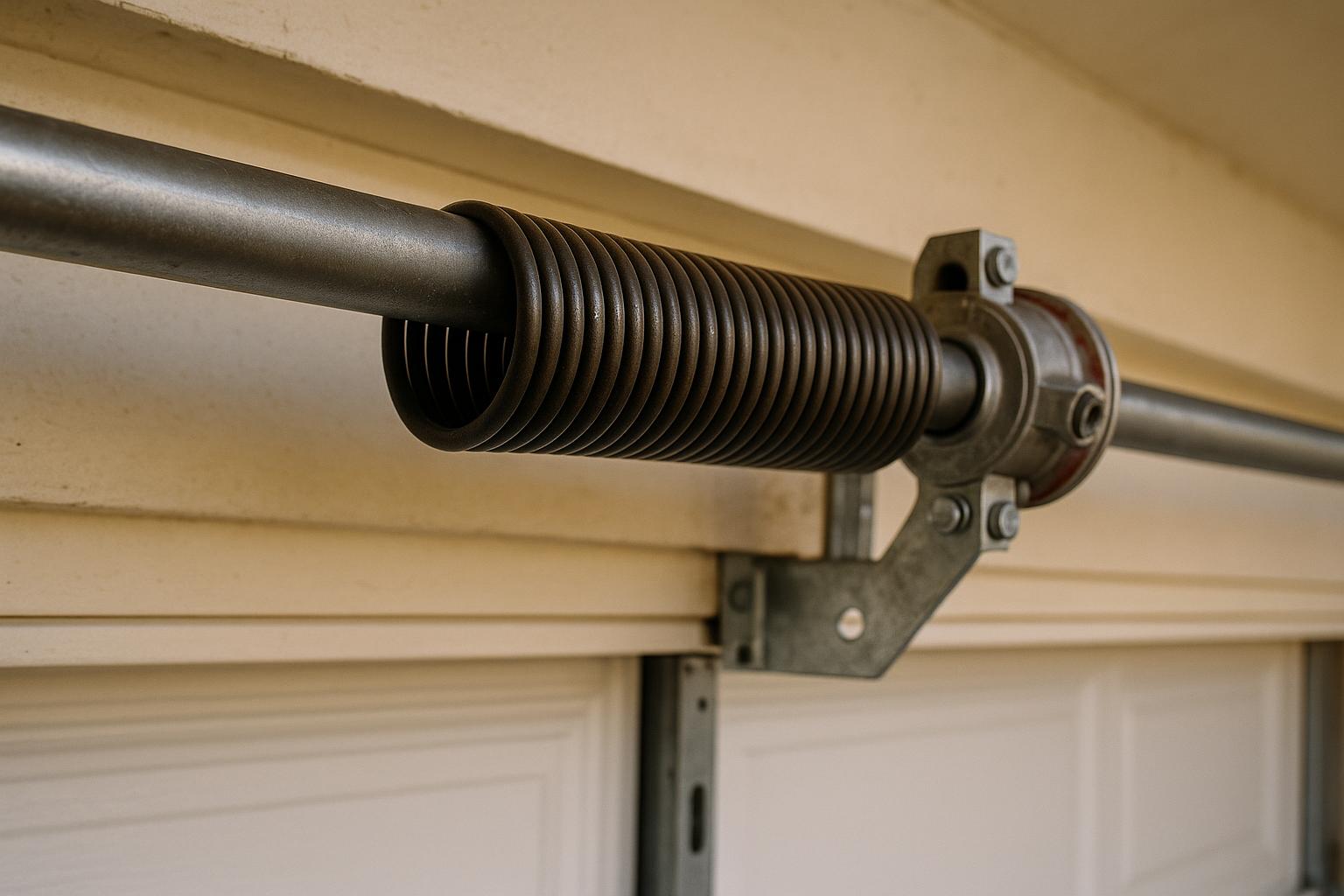
These are mounted on a metal shaft directly above the garage door opening. They use torque to lift the door and are the more common type on modern residential doors. Torsion springs tend to be more durable, offer smoother operation, and are generally safer when they break because they remain on the shaft.
Extension Springs
These run along the horizontal tracks on either side of the door and stretch to store energy. Extension springs are more common on older or lighter doors. They can be more hazardous when they fail because they can snap and fly across the garage if safety cables aren't installed.
Regardless of which type your home has, both will eventually need replacement. At Boynton Beach Overhead Door Co, we work with both types daily and can help you determine whether an upgrade to high-cycle torsion springs makes sense for your situation.
Warning Signs Your Springs Are Wearing Out
Springs rarely fail without some warning. Here are the signs to watch for:
- The door feels heavier than usual: If your garage door seems harder to lift manually, the springs may be losing tension.
- The door doesn't stay open: A properly balanced door should stay in place when lifted halfway. If it slides down, the springs are likely weakening.
- Visible gaps in the spring coils: On torsion springs, you may notice a visible gap or separation in the coils — a clear sign the spring has broken or is about to.
- Loud bang from the garage: Many homeowners report hearing a loud bang — almost like a gunshot — when a spring breaks. If you heard this and your door won't open, a broken spring is the most likely cause.
- The opener struggles or stops working: Your garage door opener is designed to work with the springs, not replace them. If the opener is straining, grinding, or refusing to lift the door, failing springs could be putting too much load on the motor.
- The door opens unevenly: If one side of the door lifts higher than the other, one of your springs (or one side of your extension spring system) may have failed.
Can You Replace Garage Door Springs Yourself?
This is one of the most common questions we get, and our answer is always the same: we strongly advise against DIY spring replacement.
Garage door springs are under extreme tension. A torsion spring on a standard residential door can hold hundreds of pounds of force. If improperly handled, a spring can release that energy suddenly, causing serious injury or even death. Emergency rooms across the country treat garage door spring injuries every year, and many of those involve homeowners attempting repairs they found in online tutorials.
Professional technicians have the specialized tools, training, and experience to replace springs safely. When you call Boynton Beach Overhead Door Co, our technicians arrive with the right winding bars, safety equipment, and replacement springs to get the job done correctly and safely — usually in under an hour.
Should You Replace Both Springs at the Same Time?
If your garage door has two torsion springs (which is common on heavier doors), we almost always recommend replacing both at the same time, even if only one has broken. Here's why:
- Both springs were installed at the same time and have the same number of cycles on them.
- If one has failed, the other is likely close behind.
- Replacing both at once saves you from paying for a second service call in a few weeks or months.
- Matched springs ensure balanced operation and reduce strain on your opener.
It's a small additional investment that saves money and hassle in the long run.
How Boynton Beach Weather Affects Your Springs
Living in South Florida means our garage door springs don't face the extreme cold that causes metal fatigue in northern climates. However, our environment comes with its own challenges. The high humidity and salt air — especially for homes closer to the coast in Boynton Beach, Delray Beach, and Lantana — can cause corrosion on springs over time. Corroded springs are weaker and more prone to sudden failure.
Regular lubrication with a silicone-based spray can help protect your springs from rust and extend their lifespan. This is one of the things we check and address during our maintenance and tune-up service, which we recommend scheduling at least once a year.
When to Call a Professional
If you're noticing any of the warning signs mentioned above, don't wait for a complete failure. A broken spring can leave your car trapped in the garage, create a security risk for your home, and potentially damage your opener if you try to force the door open.
Boynton Beach Overhead Door Co provides fast, reliable spring replacement for homes and businesses throughout Boynton Beach, Lake Worth Beach, Boca Raton, Wellington, and the surrounding area. We show up on time with the parts needed to get your door working again the same day.
If your garage door springs are showing their age — or if one has already snapped — give us a call. We'll get you back up and running safely and affordably.